What Is a Graphic Novel?
A graphic novel is a book-length work that tells a story using both art and text, blending the visual storytelling of comics with the narrative depth of novels.
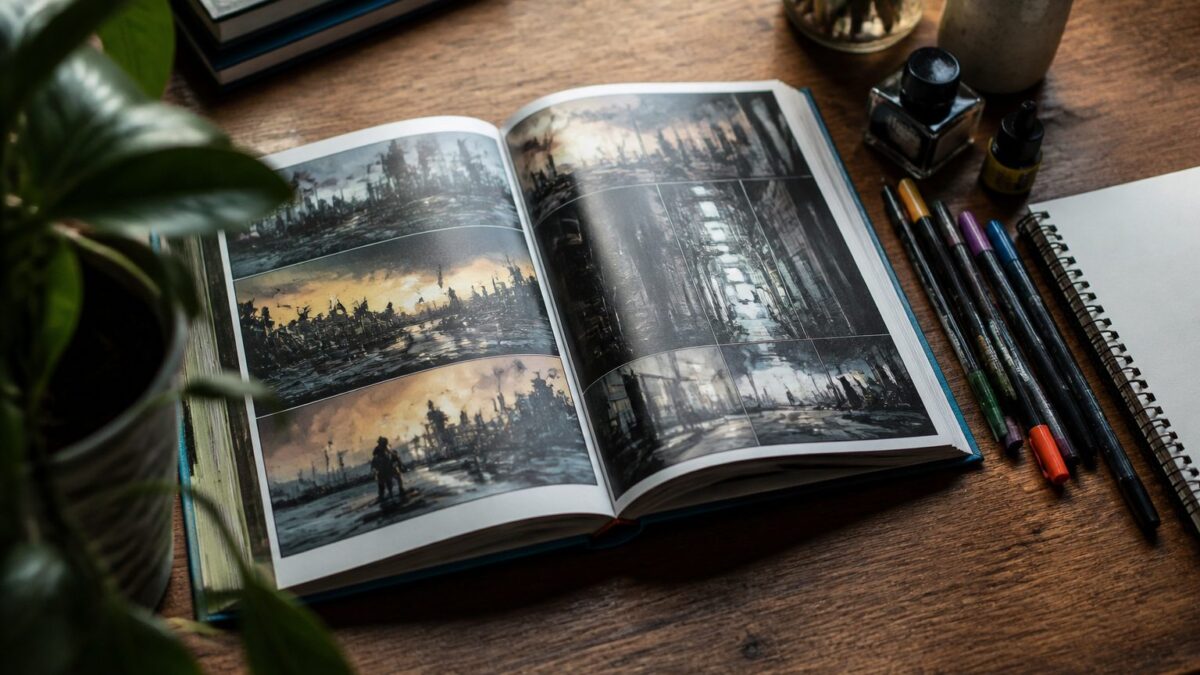
Quick answer: A graphic novel is a book-length work that tells a story primarily through sequential art, combining illustrations and text. Unlike comic strips or single-issue comics, graphic novels offer a complete narrative, often exploring complex themes and characters in a format similar to traditional books.
Graphic novels blend the visual storytelling of comics with the depth and structure of novels. They span an incredible range of genres, styles, and audiences, from superhero adventures to memoirs and literary fiction. The term is now widely used in bookstores, libraries, schools, and cultural discussions worldwide.
Understanding what sets graphic novels apart helps readers, educators, and fans appreciate their unique contributions to literature and pop culture. Whether you’re new to the format or looking to deepen your knowledge, this guide explains what makes a graphic novel, how the term developed, and why these books matter.
Key takeaways
- A graphic novel is a book-length story told through both art and text in a comic-style format.
- Unlike comic books, graphic novels offer a complete, self-contained narrative.
- The term encompasses many genres, from superhero tales to memoirs and historical fiction.
- Graphic novels are published worldwide, with major scenes in the US, Japan, France, and beyond.
- They are widely used in education and have influenced literature, film, and pop culture.
What exactly is a graphic novel?
A graphic novel is a book-length work that uses sequential art—panels of images combined with text—to tell a complete story, whether fiction or nonfiction. Unlike comic books, which are often serialized in short, periodical issues, graphic novels are typically published as self-contained volumes, allowing for more complex narratives and deeper character development.
The defining feature of a graphic novel is its integration of visual and written storytelling. Each page is composed of panels that blend artwork, dialogue, and narration, requiring readers to interpret both images and words to fully understand the story. This format enables creators to convey mood, emotion, and action in ways that traditional prose cannot, making graphic novels a unique medium for storytelling. The art style, panel arrangement, and pacing can vary widely, from the minimalist black-and-white drawings of Persepolis to the intricate, full-color pages of Blankets or Watchmen.
Graphic novels can be original works or collected editions of previously serialized comics. The term is used to distinguish substantial, book-length narratives from shorter comic books or strips. Today, graphic novels are found in bookstores and libraries alongside traditional literature, and their readership spans children, teens, and adults. Subjects range from fantasy and adventure to memoir, history, and social commentary. Notable examples include Maus (a Holocaust memoir), Fun Home (a family autobiography), and Bone (a fantasy epic). This diversity demonstrates that graphic novels are not defined by genre or audience, but by their commitment to telling stories through the interplay of art and text in a cohesive, book-length format.
Where did the term “graphic novel” come from?
The term “graphic novel” emerged in the late 20th century as a way to distinguish book-length comic stories from shorter, serialized comic books, but the roots of the format reach much further back. The phrase gained widespread recognition in the late 1970s, largely due to cartoonist Will Eisner, who used it to describe his influential work A Contract with God in 1978. Eisner wanted to set his book apart from mainstream superhero comics and emphasize its literary ambitions and mature themes.
However, the concept of telling stories through sequential art in book form predates the term itself. In the 1930s, American artist Lynd Ward created wordless novels using woodcut prints, and in Europe, the French bande dessinée tradition produced substantial comic albums well before the modern graphic novel label. These early works demonstrated that comics could tackle complex subjects and appeal to adult readers, laying the groundwork for the graphic novel as a respected literary form.
The rise of bookstores and libraries stocking comic-form books in the 1970s and 1980s further fueled the need for a new term. Publishers and creators sought a label that would signal to readers, educators, and critics that these works were self-contained, ambitious, and worthy of serious consideration. While some artists and scholars debate the boundaries of what qualifies as a graphic novel—whether it must be original, standalone, or simply book-length—the term is now widely accepted to mean any substantial narrative told through comics, whether fiction or nonfiction. Today, graphic novels are recognized as a legitimate and influential part of the literary landscape, with a rich history that continues to evolve.
How are graphic novels different from comic books?
The main difference is that graphic novels are complete, book-length stories, while comic books are typically shorter, serialized works. Comic books (sometimes called “floppies” in the US) are usually published as individual issues, often as part of ongoing series. Graphic novels, by contrast, are published as single volumes that tell a full story or a substantial chapter of a larger narrative.
- Length and format: Graphic novels are generally much longer and bound like books.
- Story structure: Graphic novels have a clear beginning, middle, and end.
- Publication: Comics are often serialized; graphic novels are typically released as complete works.
- Audience: Both formats serve all ages, but graphic novels are more likely to be found in literary and educational settings.
Despite these differences, the boundary can be blurry. Many popular graphic novels collect issues of ongoing comics into a single volume (e.g., Watchmen or Maus). The key distinction is the self-contained, book-length presentation.
What are the main types and genres of graphic novels?
Graphic novels cover a vast range of genres and styles, appealing to all kinds of readers. Some of the most common types include:
- Superhero stories: Long-form tales from Marvel, DC, and other publishers, often collecting story arcs.
- Manga: Japanese graphic novels, often serialized in magazines before being collected into books. Popular genres include shonen (action), shojo (romance), seinen (adult), and more.
- Memoir and autobiography: Personal stories told through comics, such as Persepolis or Fun Home.
- Literary fiction: Original novels with complex characters and themes, like Blankets or Daytripper.
- Nonfiction and history: Works that explore real events, such as Maus or March.
- Fantasy and science fiction: Epic worlds and imaginative stories, from Saga to Nausicaä of the Valley of the Wind.
Beyond these, there are graphic novels for children, teens, and adults, covering every imaginable subject. The global market includes French bande dessinée, Korean manhwa, and more.
How are graphic novels made?
Graphic novels are produced through a multi-step creative and technical process that often involves collaboration among writers, artists, and other specialists, though some creators manage every aspect themselves. The creation of a graphic novel blends storytelling, visual art, and design, resulting in a unique narrative form that relies on the interplay between words and images.
- Story development: Every graphic novel begins with a concept or story idea. The creator or team outlines the plot, develops characters, and determines the narrative’s structure—much like the planning phase for traditional novels or screenplays.
- Scripting: The writer crafts a detailed script, breaking down the story into pages and panels. This script includes dialogue, captions, and descriptions of what each panel should depict, guiding the visual storytelling.
- Thumbnailing: Artists create rough sketches called thumbnails to plan the layout of each page. This stage is crucial for pacing, composition, and ensuring that the flow of action and dialogue makes sense visually.
- Penciling and inking: The penciler draws more detailed versions of each panel, refining the artwork. An inker may then go over these pencil lines with ink to produce crisp, final linework, emphasizing depth and clarity.
- Coloring and lettering: Colorists add color, which can set mood, highlight action, or convey emotion. Letterers place dialogue, narration, and sound effects within the artwork, ensuring readability and integrating text seamlessly with the images.
After the art and text are complete, the graphic novel undergoes editing to check for consistency, clarity, and errors. The final version is prepared for printing or digital publication. Printing involves selecting paper quality, binding, and cover design, all of which contribute to the book’s final appearance. The collaborative nature of making graphic novels means that each project can have a distinct style and workflow. For example, some well-known works like Persepolis or Watchmen involved close partnerships between writers and artists, while others, such as Art Spiegelman’s Maus, were created by a single author-artist. The process allows for a wide range of artistic expression, making graphic novels a versatile and evolving medium.
Notable examples of graphic novels worldwide
Some graphic novels have become cultural milestones, recognized for their storytelling and artistic achievement. Key examples include:
- Maus by Art Spiegelman (US): A Pulitzer Prize-winning memoir about the Holocaust, told using animal characters.
- Persepolis by Marjane Satrapi (France/Iran): An autobiographical account of growing up during the Iranian Revolution.
- Akira by Katsuhiro Otomo (Japan): A landmark science fiction manga set in a dystopian future Tokyo.
- Blankets by Craig Thompson (US): A coming-of-age story exploring family, faith, and first love.
- Blue Is the Warmest Color by Julie Maroh (France): A moving tale of love and identity.
- 20th Century Boys by Naoki Urasawa (Japan): A complex thriller spanning decades.
- Asterix by René Goscinny and Albert Uderzo (France): A beloved comedic adventure series set in ancient Gaul.
These books represent just a fraction of the diversity found in graphic novels worldwide. Many have been adapted into films, TV series, and stage productions, further extending their reach.
How are graphic novels used in education?
Graphic novels are used in education as dynamic tools to enhance literacy, foster engagement, and introduce complex ideas in accessible ways for students of all ages. Teachers and librarians increasingly incorporate graphic novels into curricula and reading programs because these books combine visual and textual storytelling, making them especially effective for diverse learning needs and interests.
One of the main advantages is their ability to promote both traditional literacy and visual literacy. By requiring readers to interpret images, panel layouts, and sequential art, graphic novels help students develop critical reading skills that go beyond decoding text. This dual engagement is particularly beneficial for visual learners and can aid comprehension for students who struggle with dense blocks of text.
- Promote literacy and visual literacy skills: The combination of images and words helps readers understand narrative structure, infer meaning, and expand vocabulary.
- Introduce complex subjects in accessible ways: Graphic novels like Maus (which explores the Holocaust), March (about the American civil rights movement), and American Born Chinese (addressing identity and cultural assimilation) present challenging historical, social, and personal topics in a format that is approachable for young readers.
- Support reluctant or struggling readers: The visual elements and shorter text passages can make reading less intimidating, providing a gateway for students who might otherwise avoid books.
- Foster empathy and cultural awareness through diverse stories: Graphic novels often highlight underrepresented voices and experiences, helping students build empathy and understanding across cultures and backgrounds.
Educators use graphic novels as springboards for classroom discussion, creative writing assignments, and art projects. For example, after reading a graphic novel, students might create their own comics to demonstrate comprehension or explore themes further. The visual nature of the medium also supports language learners, providing context clues that aid in understanding new vocabulary or idiomatic expressions. Graphic novels are now featured in reading lists, literature circles, and even advanced placement courses, demonstrating their versatility and value in modern education worldwide.
How do graphic novels compare to manga, manhwa, and bande dessinée?
Graphic novels, manga, manhwa, and bande dessinée are all forms of long-form comics, but each arises from distinctive cultural traditions and follows unique conventions in terms of style, format, and reading experience. While these terms are sometimes used interchangeably in global markets, understanding their differences helps readers appreciate the diversity of the comic arts across the world.
- Manga: Originating in Japan, manga refers to a vast array of comic books and graphic novels that are typically serialized in magazines before being collected into volumes. Manga is read right-to-left, both on the page and in book format, and spans all genres—action, romance, horror, slice-of-life, and more. Famous examples include Naruto, One Piece, and Akira. The visual style is often characterized by expressive characters and dynamic panel layouts.
- Manhwa: Hailing from South Korea, manhwa encompasses both print and digital comics. Modern manhwa is especially known for webtoons—digitally published comics designed for vertical scrolling on smartphones and computers, often presented in full color. Popular manhwa such as Solo Leveling and Tower of God have gained international readership. Print manhwa may read left-to-right, aligning with Western conventions.
- Bande dessinée: The French and Belgian tradition, often called “BD,” is renowned for its large, hardcover albums and detailed artwork. Bande dessinée is a cornerstone of European literary culture, with classics like The Adventures of Tintin and Asterix beloved by generations. BD is typically read left-to-right and often features meticulously crafted stories and art.
When these works are published as complete, book-length stories, they can all be considered graphic novels. The primary distinctions lie in cultural context, artistic style, publishing format, and reading direction. For example, manga’s right-to-left orientation and stylized art differ from the clear-line style and album format of bande dessinée. Manhwa’s digital-first approach has influenced how comics are consumed globally, especially among younger readers. Many of these works are translated and adapted for international audiences, contributing to the rich, interconnected world of graphic storytelling. Understanding these differences enhances appreciation for the unique qualities each tradition brings to the art of the graphic novel.
What is the impact of graphic novels on pop culture?
Graphic novels have had a significant influence on literature, film, TV, and even video games. Many acclaimed movies and series are based on graphic novels, including Persepolis, Watchmen, Scott Pilgrim vs. the World, and V for Vendetta. The format has also inspired novelists, artists, and filmmakers to experiment with visual storytelling.
In the literary world, graphic novels have earned major awards and critical recognition, breaking down barriers between “high” and “low” art. They are now a staple in bookstores, libraries, and academic discussions, and their influence continues to grow as new voices and genres emerge.
| Term | Definition | Region of Origin | Typical Format |
|---|---|---|---|
| Graphic Novel | Book-length story told through sequential art | Global (term popularized in US) | Bound book, complete narrative |
| Comic Book | Serialized story in short, periodic issues | Global | Saddle-stitched, usually 20-40 pages |
| Manga | Japanese comic, often serialized then collected | Japan | Paperback “tankobon” volumes, read right-to-left |
| Manhwa | Korean comic, print or webtoon format | Korea | Print volumes or digital scrolling |
| Bande dessinée | French-language comic, often album format | France/Belgium | Hardcover album, large-format |
Frequently asked questions
What makes a graphic novel different from a picture book?
Graphic novels use sequential art and multiple panels per page to tell a continuous story, while picture books usually feature single illustrations with accompanying text. Graphic novels are often longer and aimed at older readers, though there are graphic novels for children as well.
Can graphic novels be nonfiction?
Yes, many graphic novels are nonfiction. Popular examples include memoirs, biographies, and historical accounts like Maus, Persepolis, and March. The format is well-suited for exploring real-life events and personal stories through both words and images.
Are graphic novels only for young readers or teens?
No, graphic novels are created for all ages, including children, teens, and adults. Many acclaimed works tackle mature themes and are intended for adult audiences, while others are designed specifically for younger readers.
Do graphic novels have to be in color?
No, graphic novels can be in full color, black-and-white, or use limited color palettes. The choice depends on the creator’s vision, the story’s tone, and production factors. Some classic works, especially manga, are traditionally black-and-white.
Are all comics considered graphic novels?
No, not all comics are graphic novels. Comic strips, comic books, and webcomics may be shorter, serialized, or episodic. A graphic novel is specifically a book-length work with a complete or substantial story arc, though the boundaries can overlap.
How do I start reading graphic novels?
Begin with highly regarded titles in a genre you enjoy, such as Persepolis (memoir), Bone (fantasy), or Watchmen (superhero). Libraries and bookstores often have dedicated graphic novel sections. Explore recommendations, and don’t hesitate to try different styles from around the world.
The bottom line
Graphic novels are a unique and dynamic form of storytelling, combining art and text to create immersive, memorable narratives. With a rich history and global reach, they offer something for every reader and continue to shape the worlds of literature, art, and pop culture.