10 Classic Board Games Everyone Should Know
These 10 classic board games—from Chess to Clue—have entertained generations and shaped how people play and connect around the world.
Quick answer: Classic board games are tabletop games—like Chess, Monopoly, and Scrabble—that have stood the test of time and become household staples worldwide. These games are celebrated for their simple rules, social interaction, and enduring appeal across generations, making them essential knowledge for anyone interested in gaming or cultural pastimes.
Board games are more than just a way to pass the time—they’re a window into social traditions, strategy, and creativity that cross cultures and decades. Some games are centuries old, while others date to the 20th century’s golden age of family entertainment. Knowing the classics means understanding the roots of modern gaming and the shared experiences that unite players around the globe.
This list covers 10 classic board games everyone should know, including their origins, mechanics, and what makes each one timeless. Whether you’re new to tabletop gaming or revisiting old favorites, these are the titles that define the genre.
Key takeaways
- Classic board games have influenced both modern tabletop and digital gaming.
- Many are easy to learn but offer deep strategic possibilities.
- These games are played and loved worldwide, transcending age and culture.
- Most classics can be found in homes, libraries, and cafes around the globe.
- Learning these games connects you to a rich tradition of social play.
What makes a board game a “classic”?
A classic board game is one that has endured for generations, widely recognized and played across different cultures and age groups. These games typically feature simple rules, engaging gameplay, and the ability to bring people together. Their longevity comes from a balance of accessibility and depth—easy for beginners, yet offering enough challenge for repeated play.
Many classics are notable for their influence on later games and their presence in pop culture. From the strategic depth of Chess to the luck-driven excitement of Snakes and Ladders, these games are part of shared family traditions and often evoke a sense of nostalgia. A board game earns “classic” status through longevity, cultural impact, and the ability to foster memorable social experiences.
1. Chess: The game of kings
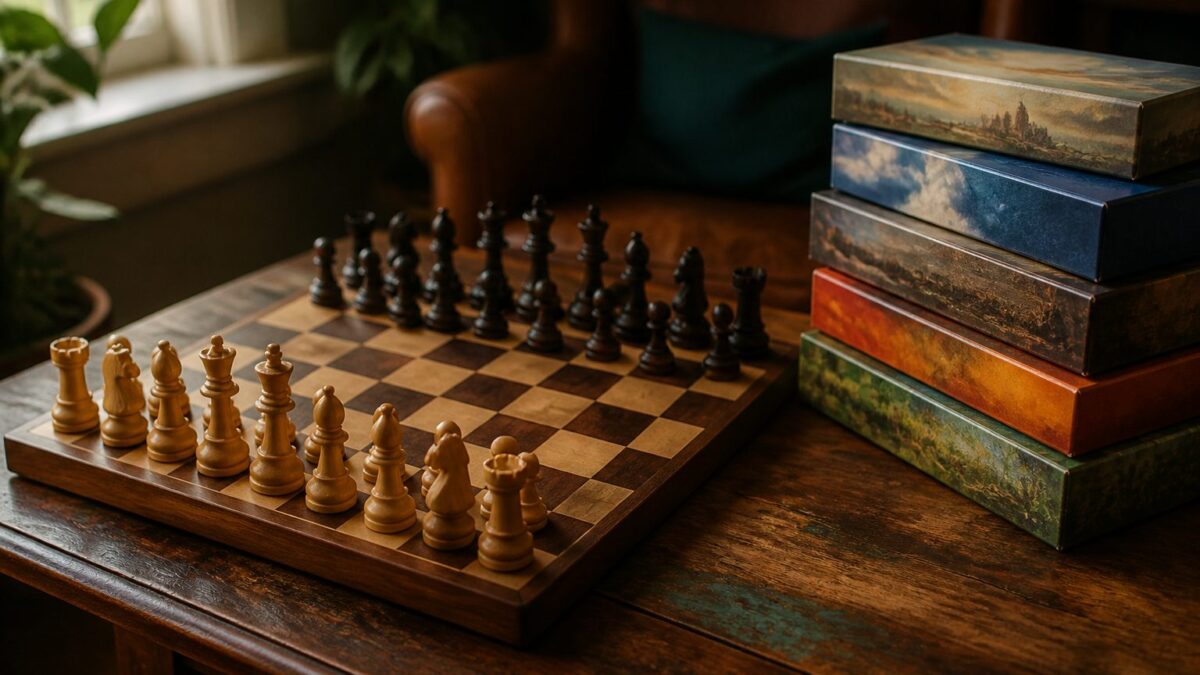
Chess is a two-player strategy game played on an 8×8 checkered board, with each side commanding 16 pieces. Believed to have originated in India before the 7th century, Chess is now played competitively and casually around the world. Its simple rules conceal extraordinary depth, with millions of possible moves and strategies.
The game’s cultural significance is immense. Chess is featured in literature, film, and education, and has inspired international tournaments and grandmasters. The game’s enduring appeal lies in its blend of tactics, foresight, and the psychological duel between players. Learning Chess not only sharpens the mind but also connects you to a global community.
- Players: 2
- Skills: Strategy, planning, pattern recognition
- Why it’s classic: Universal rules, infinite depth, iconic status
2. Monopoly: The property trading powerhouse
Monopoly is a real estate and finance game published by Parker Brothers in 1935. Players buy, trade, and develop properties, aiming to bankrupt opponents. Its iconic board, tokens, and money are instantly recognizable, and it’s been adapted into hundreds of editions worldwide.
Monopoly’s appeal is partly its blend of luck and negotiation. Rolling dice introduces chance, but shrewd trading and deal-making can turn the tide. The game has sparked both family fun and notorious rivalries, and its influence is seen in countless economic and tycoon games today.
- Players: 2–8 (best with 3–5)
- Skills: Negotiation, risk management, math
- Why it’s classic: Enduring popularity, cultural references, family tradition
3. Scrabble: Wordplay and wits
Scrabble is a word-building game invented in 1938 by Alfred Butts. Players use letter tiles to form words on a grid, scoring points based on letter values and board placement. Scrabble is beloved for its blend of vocabulary, strategy, and a bit of luck.
The game has become a staple in language-learning and family game nights, with tournaments held worldwide. It appeals to both casual players and serious competitors, thanks to its balance of chance (drawing tiles) and skill (word knowledge and placement strategy).
- Players: 2–4
- Skills: Vocabulary, spatial reasoning, strategy
- Why it’s classic: Language learning, competitive play, cross-generational fun
4. Clue (Cluedo): The original mystery game
Clue—known as Cluedo outside North America—was created in Britain in 1949. Players are detectives, racing to solve a murder by deducing the suspect, weapon, and room. The game’s iconic characters and mansion setting have inspired adaptations in film, TV, and books.
Clue’s deductive mechanics encourage logical thinking and social interaction, as players gather clues and outwit each other. Its blend of suspense and deduction has made it a perennial favorite for family and party gaming.
- Players: 3–6
- Skills: Deduction, memory, bluffing
- Why it’s classic: Enduring mystery, memorable characters, replayable
5. Checkers (Draughts): Jumping into tradition
Checkers, or Draughts, is a simple two-player strategy game with roots dating back to ancient Egypt. Played on a square board (usually 8×8), the goal is to capture or block all of the opponent’s pieces by jumping over them diagonally.
Checkers is easy to learn, making it accessible for young children, but mastering the game requires foresight and tactical planning. Its straightforward rules and quick play have made it a favorite in homes and cafes worldwide.
- Players: 2
- Skills: Strategy, pattern recognition, planning
- Why it’s classic: Ancient origins, universal appeal, simple setup
6. Backgammon: Ancient luck and skill
Backgammon is one of the oldest known board games, dating back over 5,000 years to Mesopotamia. Players race to move all their pieces off the board, using a combination of dice rolls and strategic blocking or hitting of opponents’ checkers.
The game blends chance and skill, with dice introducing uncertainty and clever moves making the difference. Backgammon’s rich history and simple equipment—just a board, checkers, and dice—have helped it endure across cultures, from the Middle East to Europe and beyond.
- Players: 2
- Skills: Probability, risk management, tactics
- Why it’s classic: Ancient legacy, blend of luck and skill, global reach
7. Snakes and Ladders: Luck and laughter
Snakes and Ladders is a simple race game that originated in ancient India as Moksha Patam. Players roll dice to move along a numbered track, climbing ladders and sliding down snakes. The game is pure luck, making it accessible to all ages.
Its simplicity and colorful boards have made it a childhood favorite worldwide, often serving as an introduction to board gaming for young children. The game’s message—progress and setbacks are part of life—adds a layer of playful philosophy.
- Players: 2 or more
- Skills: Counting, patience
- Why it’s classic: Universal accessibility, teaches turn-taking, global variations
8. The Game of Life: A journey through choices
The Game of Life, created in 1960 by Milton Bradley, simulates a person’s journey from college to retirement, with choices about career, family, and fortune. Players spin a wheel to move and encounter opportunities and setbacks along the way.
Life is known for its colorful board, spinner, and playful approach to adult milestones. It balances luck with decision-making, making every playthrough unique. The game is popular for family gatherings, offering a lighthearted take on life’s twists and turns.
- Players: 2–6
- Skills: Decision-making, planning
- Why it’s classic: Relatable theme, replay value, family-friendly
9. Risk: World domination in a box
Risk, created in 1957 by Albert Lamorisse, is a game of global conquest. Players deploy armies, attack territories, and form alliances, aiming to control the world map. Its blend of strategy, negotiation, and dice-driven combat has inspired countless imitators.
Risk’s appeal lies in its epic scale and the tension between cooperation and betrayal. Sessions can last hours, with shifting alliances and dramatic reversals. The game is a rite of passage for strategy fans and a touchstone of competitive board gaming.
- Players: 2–6 (best with 4–5)
- Skills: Strategy, negotiation, long-term planning
- Why it’s classic: Epic gameplay, strategic depth, global theme
10. Connect Four: Four in a row, fast and fun
Connect Four, released in 1974 by Milton Bradley, is a fast-paced game where players drop colored discs into a vertical grid, aiming to form a line of four. The rules are simple, but spotting winning moves and blocking opponents requires sharp observation.
This game is popular in schools, homes, and cafes for its quick rounds and satisfying victories. Connect Four is often a child’s first introduction to strategy, teaching pattern recognition and competitive thinking in a playful format.
- Players: 2
- Skills: Pattern recognition, tactics
- Why it’s classic: Quick play, easy to learn, addictive competition
How do these classics compare?
| Game | Origin | Players | Main Skill | Luck vs. Skill | Typical Play Time |
|---|---|---|---|---|---|
| Chess | Ancient India | 2 | Strategy | Skill | 30–90 min |
| Monopoly | 1930s USA | 2–8 | Negotiation | Moderate luck | 60–180 min |
| Scrabble | 1938 USA | 2–4 | Vocabulary | Balanced | 50–90 min |
| Clue | 1949 UK | 3–6 | Deduction | Skill | 45–60 min |
| Checkers | Ancient Egypt | 2 | Strategy | Skill | 20–45 min |
| Backgammon | Mesopotamia | 2 | Tactics | High luck | 30–60 min |
| Snakes and Ladders | Ancient India | 2+ | Counting | Luck | 15–30 min |
| The Game of Life | 1960 USA | 2–6 | Decision-making | High luck | 60–90 min |
| Risk | 1957 France | 2–6 | Strategy | Moderate luck | 90–240 min |
| Connect Four | 1974 USA | 2 | Pattern recognition | Skill | 5–15 min |
Why do these games remain popular?
These classic board games remain popular because they combine simplicity with depth, offering engaging experiences for all ages. Their rules are easy to teach, but mastery takes time, rewarding repeated play. Many classics also encourage face-to-face interaction, conversation, and healthy competition—qualities that digital games sometimes lack.
Another reason is nostalgia. Many people associate these games with childhood, family gatherings, or friendly rivalries, creating lasting memories. Their adaptability—through new editions, themed versions, and house rules—keeps them fresh for each generation. Finally, their universal appeal transcends language and culture, making them common ground for people worldwide.
How have classic board games influenced modern gaming?
Classic board games laid the foundation for today’s tabletop and digital games. Their mechanics—such as turn-taking, resource management, and hidden information—are echoed in modern strategy, party, and video games. For example, Chess inspired countless strategy games, while Monopoly’s trading system appears in economic simulations.
Modern game designers often reference classics when creating new titles, borrowing and reinventing core ideas. The social and educational aspects of classic games also inform today’s collaborative and competitive play, bridging generations of players and shaping gaming culture.
Are there regional variations of these classics?
Yes, many classic board games have regional variants reflecting local culture and tradition. For instance, the rules and board layouts for Checkers (Draughts) differ between English, American, and international versions. Clue is known as Cluedo in the UK, with slight rule adjustments and character names.
Snakes and Ladders originated as Moksha Patam in India, symbolizing moral lessons, and has been adapted with different themes worldwide. Even Monopoly has country-specific editions featuring local landmarks. These variations keep the games relevant and tailored to different audiences.
Which classic board games are best for families?
Games like Monopoly, The Game of Life, Scrabble, and Clue are especially popular with families due to their inclusive rules and ability to accommodate multiple players. These games encourage group participation, teach valuable skills, and often spark lively conversation.
Snakes and Ladders and Connect Four are ideal for younger children, thanks to their simplicity and quick playtime. For families seeking strategy, Chess and Checkers are excellent choices. Ultimately, the best game depends on the ages and interests of the players.
Tips for getting started with classic board games
Starting with classic board games is easy—most are widely available in stores, libraries, and online. Begin by reading the official rules, then play a practice round to get comfortable. Many games offer beginner-friendly variants or online tutorials for learning the basics.
- Choose games suited to your group’s size and age range.
- Don’t worry about mastering strategy right away—focus on having fun.
- Try different classics to discover which styles and themes you enjoy most.
- Consider themed editions or travel versions for added variety.
Remember, the best part of classic board games is the shared experience—so invite friends or family, set up a comfortable space, and enjoy the timeless fun.
Frequently asked questions
What is the oldest classic board game still played today?
Backgammon is often considered the oldest classic board game still widely played, with origins tracing back over 5,000 years to ancient Mesopotamia. Chess and Checkers also have ancient roots, but Backgammon’s continuous history and unchanged core rules set it apart as a living link to the past.
Which classic board game is best for beginners?
Snakes and Ladders is typically the easiest classic board game for beginners, especially young children, as it relies entirely on luck and simple counting. Connect Four and Checkers are also excellent choices, offering straightforward rules and quick rounds that help new players learn basic strategy and turn-taking.
Are there classic board games that support large groups?
Monopoly, The Game of Life, and Clue are designed to accommodate more players, often up to six or eight. These games are ideal for family gatherings or parties, offering inclusive gameplay and plenty of opportunities for social interaction. Some versions of classic games offer expanded rules or boards to support even larger groups.
Do classic board games help develop skills?
Yes, classic board games can help develop a range of skills, including critical thinking, vocabulary, math, negotiation, and social interaction. Games like Chess and Scrabble sharpen the mind, while Monopoly and Risk teach decision-making and resource management. Even luck-based games foster patience and turn-taking.
Why do some classic board games have different names in different countries?
Many classic board games were created or adapted in different regions, leading to variations in names and rules. For example, Clue is known as Cluedo in the UK, reflecting its British origins. Local publishers often tailor games to cultural preferences, resulting in unique editions that maintain the core gameplay but resonate with local players.
Where can I play classic board games online?
Many classic board games are available on digital platforms and apps, allowing you to play with friends or against AI opponents. Popular sites and services offer Chess, Monopoly, Scrabble, and more, often with tutorials and matchmaking. Libraries and community centers may also host in-person game nights for those who prefer traditional play.
The bottom line
Classic board games are timeless for a reason—they’re easy to learn, endlessly replayable, and bring people together across cultures and generations. Knowing these 10 classics connects you to the heart of gaming tradition and offers endless opportunities for fun and learning.